






|
|
|
|
|
|
|
|
|

A basic intro to how composers create realistic orchestral music without an orchestra..
Since I published this blog post, I have gone on to write and produce multiple tracks for orchestra as well as several commissions for chamber groups for members of the local Amateur Chamber Music Society.
I've recently written some orchestral pieces so thought I'd give readers without a background in music technology an introduction to creating this kind of music without an actual orchestra.
After all, it was only this time last year that I had no idea myself how any of this works and what could be accomplished with software already on my Macbook.
During my previous incarnations as a musician - decades ago - did not take me into the territory of electronic music or synthetic sound. When I stepped back through the door into the world of music during the 2020 lockdowns, I found a whole new world had grown up behind me creating an array of possibilities as a composer that did not occur to me in years past.
In fact, the world of virtual instruments developed to such an extent that I often catch myself pulling my earphone out of my ear just to check that my neighbours really can't hear the 'piano in a bathroom' sound I could swear is echoing around me!
Check out Waiting, a piece for piano, clarinet and strings...
So where do those realistic sounds come from? Ironically enough, every Mac like mine comes with a program called GarageBand, a 'Digital Audio Workstation' normally refered to as a DAW. I had previously never opened this program and had no real idea what it was for. I thought it was some kind of game.
If you want to find out more about DAWs, here is a brief overview which includes free options and there are plenty of vidoes on YouTube to get you started (though I notice a distinct lack of female voices).
I was in for both a treat and a challenge as I navigated my way through what I found to be a very frustrating trial and error process of learning what these programs make easy and which parts of musical composition are best done with other programs.
I'm going to take readers through a tour of my current approach to composition using Waiting (above) for those just curious or for people starting out like I did a year ago to avoid some of the frustrating moments which saw me threatening to throw my laptop off the nearest bridge!
Rather than go through the whole explanation of what these programs do myself, I found an excellent video on YouTube and can only wish that I had seen it a year ago because it explains to viewers, regardless of their background just what virtual instruments are and how DAWS are used to create sophistocated music and also what not to use them for ie- musical notation.
The video by Benjamin Botkin explains the role played by midi in today's music. For those interested in the technical side of sound, Stephan Witt's How Music Got Free is such a fascinating history of the huge technical challenge that constituted the development of midi and the virtual instruments they mimic that I'm reading it again now.
I also feel compelled to mention that Bejamin makes using DAWS look a lot easier than it actually is for anyone who doesn't have such an expert grasp of the software - and that of course says nothing for the musical skills required. DAWS do make amazing things possible though!
When I create a piece of music I use both a DAW and a musical notation program, in my case, MuseScore which is free and open source. You'll only need this software if you can read music otherwise it's much easier to use the DAW alone to throw together some 'loops'. If you want to know what just one aspect of creating such complex software entails, check out the video from the creator of the musical font that is to music what the alphabet is to language.
Musical notation programs focus on the creation of written scores for musicians to play from. Like a DAW, however, both types of program contain the ability to play the sounds input using different instruments and, to an extent, the different articulations or techniques each acoustic instrument can produce.
Musical articluation is like a tone of voice, making a note or melody angry or sad or jaunty. It's one of the aspects that distinguish acousticly performed music from that which is more obviously computer generated.
When I create a piece of music I start out on an electric piano which allows creating and storing soundfiles which can then be manipulated using a DAW. These days with a relatively cheap electronic keyboard you can plug into a DAW and use it to make any of the instrument sounds included with that DAW as you play. This vastly expands the scope of what can be created with electronic music.
Though I do occasionally play snippets of pieces directly into the DAW for recording, I generally notate each track or individual instrument part separately in MuseScore as I go, (ie write the notes in musical notation) then export the resulting files for further tweaking in GarageBand.
While DAWS like GarageBand do come with and the capacity to download a free sound library of instrument sounds and loops (ie guitar licks or short musical phrases or rhythms), these libraries are augmented with independently produced virtual instrument libraries to provide a fuller range of sounds.
This can be important because a trumpet in a Miles Davis type jazz piece is going to sound very different than a trumpet playing music reminiscent of a royal coronation or orchestra.
I was lucky enough to have someone tip me off that the BBC Symphony Orchestra had worked with a company called Spitfire Audio to create a sound library of orchestral sounds which I was able to obtain free of charge. These are the 'plug-ins' that Benjamin Botkin speaks of in the aforementioned video, being used to enhance the default instrument sounds.
While these sounds have become integral to much of my composition, I find that I can not get all the variations in tone production that I require and this is where I am greatful for MuseScore, a free program which allows me to export not only midi files (which store the notes but not the MuseScore sound) but wav versions which keep the stunning tone of the solo instrument as opposed to hearing a choir of strings, for example.
This is why the same piece of music sounds different when generated from the Musescore score as opposed to after those parts have been exported into the DAW for further editing or enhancing.
You can see the midi versions in green and the wav files at the bottom in orange (a few bars in). The wav files are the Musescore sounds and the midi versions can be altered by the sound libraries I download and plug into GarageBand.
Share your question or comment and Rosie will respond here. Comments published at Rosie's discretion.
0 comments so far.
The government has been lying to us about AI and copyrightThemes:When machines rule the world!
Published 26th Jun 2026Tech bros want us to pay for their free lunch This post (originally published on August 30 ,2025) has been re-dated & published with updates due to changes in government policy revealed by a whistleblower. The first notion I had that the music ... |
What life is really like for living composersThemes:Learning new skills: performing, recording, composing, engaging!
Published 23rd Jun 2026Here's what I learned from analysing my visitor data Getting positive feedback as a living composer is not easy. Most avenues for sharing new compositions or arrangements are closed to us, buttressed with stern warnings against self-promotion. Sharing o ... |
Introducing Free Piano Solo BookletsThemes:Learning new skills: performing, recording, composing, engaging!
Published 25th May 2026I'm introducing booklets to make my piano music easier to find and use. If you're here for the first time, I'd like to welcome you to my site and my music. During the lockdowns, I wrote a large number of original compositions, many of them for solo piano. My int ... |
Introducing New Trumpet ArrangementsThemes:Learning new skills: performing, recording, composing, engaging!
Published 12th May 2026Check out my growing list of new trumpet arrangements The aim of these arrangements is to extend the repertoire for trumpet at a rate of one every week or so (and play my favourite music!). These arrangements are divided between public domain classics an ... |
Leveling the playing field using Musescore and Braille MusicThemes:Learning new skills: performing, recording, composing, engaging!
Published 17th Mar 2026See the music world through the eyes of the blind I also introduced direct access to Musescore files of every score. This big change came about after I was asked about providing Musescore files on Reddit to a vision-impaired user.This seemed a f ... |
Interview with Music Industry ProThemes:Learning new skills: performing, recording, composing, engaging!
Published 23rd Oct 2025Find out what it takes to break into and survive in the Australian music industry As a requirement of my TAFE course in music performance I have interviewed industry professional, Michael Chambers to share knowledge of what is important to get right when you're entering or survi ... |
Musescore has been emptying my bank accountThemes:When machines rule the world!
Published 4th Sep 2025Crazy charges from Musescore have cost me a fortune
Musescore is a website built for storing and sharing musical scores created with the free software of the same name. The software makers have no ties to the score-sharing site apart from sharin ... |
Going viral on TikTok and no idea whyThemes:When machines rule the world!
Published 26th Jul 2025A look at what happens when you go viral on TikTok I've only recently gone back into doing my music. A couple of years into my composing efforts, I'd gotten distracted by other things. A few weeks ago I decided to check back into my distributor's das ... |
The Story Behind Bin Chicken BanterThemes:Learning new skills: performing, recording, composing, engaging!
Published 16th Jul 2025The Bin Chicken is as Australian as Bluey. I wrote a piece to honour their place in Australian culture. I recently released an album of brass band/ensemble pieces, including the track titled 'Bin Chicken Banter. Considering much of my audience is from outside Australia, I thought I should explain what a ... |
The Story Behind AntarcticaThemes:Learning new skills: performing, recording, composing, engaging!
Published 10th Jul 2025This blog post follows the story of my piece Antarctica from duet to chamber orchestra. If you are at all familiar with my scores you may have noticed that there are usually several arrangements of the same piece. Writing for the general public chamber groups is very much a hit and mis ... |
The difference between mixing and masteringThemes:Learning new skills: performing, recording, composing, engaging!
Published 5th Nov 2023An overview of the different roles in making music I haven't blogged for a while so I thought I'd get back into things with a blog post about the difference between music composition, production, mixing and mastering. These terms are closely related b ... |
A look at the benefits and questions raised by composition competitionsThemes:Learning new skills: performing, recording, composing, engaging!
Published 30th Jun 2022Composition competitions, are they worth it? As a fledgling composer I have had the joy of experiencing many things for the first time over the past 18 months. One of those things is entering composition competitions. Not long after I beg ... |
2 comments so far.
On 25th Sep 2026, John Miao said they would use Arioso by Bach-Orchestra-Trumpet, Cor Anglais, Violin, Viola, Cello, Double Bass for 'A school charity concert fundraiser. One time use'.
On 8th Sep 2026, Dylan said they would use Lazy Bones-Jazz Band-Clarinet, Trumpet, Trombone, Percussion, Piano, Bass, Drums for 'Music GCSE potential ensemble performance'.
|
[25] Cheerful

|
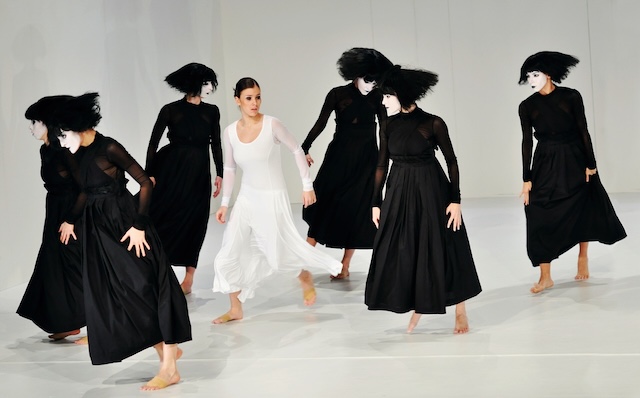
[17] Dramatic
|
[102] Gentle

|
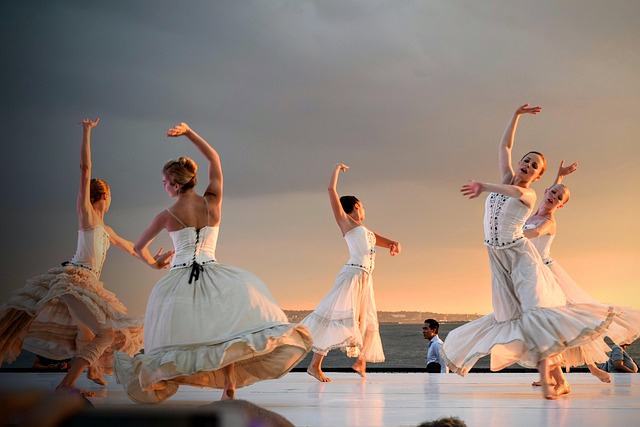
[17] Invigorating
|
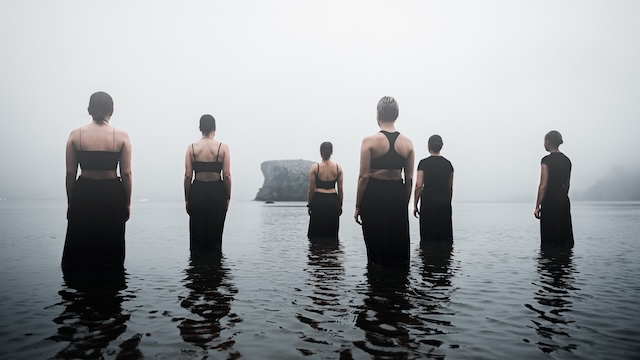
[18] Sad
|
| 561 views | 705 views | 796 views | 717 views | 686 views |

|

| 
| 
| 
| 
| 
| 
| 
| 
| 
| 
| 
| 
| 
| 
| 
| 
| 
| 
| 
| 
| 
| 
| 
| 
|

|