






|
|
|
|
|
|
|
|
|
| ❮ |
Welcome. Here you will find a total of 177 scores including popular covers & public domain scores re-imagined for trumpet or flugelhorn,
as well as a wealth of original music scored for everything from solo players
to orchestra!
Click the arrows for latest additions...Terms of Use Pictured: My Jupiter XO1600 trumpet! |
❯ |
| ❮ |
|
❯ |
| ❮ |
Creating Arrangements - From Inspiration to ReleaseProviding insight into the journey of giving an old score new lifeBlogpost by Rosie Williams published:18th Nov 2026 |
Creating Arrangements - From Inspiration to Release |
❯ |
| ❮ |
The government has been lying to us about AI and copyrightTech bros want us to pay for their free lunchBlogpost by Rosie Williams published:26th Jun 2026 |
The government has been lying to us about AI and copyright |
❯ |
| ❮ |
Introducing Free Piano Solo BookletsI'm introducing booklets to make my piano music easier to find and use.Blogpost by Rosie Williams published:25th May 2026 |
Introducing Free Piano Solo Booklets |
❯ |
| ❮ |
Introducing New Trumpet ArrangementsCheck out my growing list of new trumpet arrangementsBlogpost by Rosie Williams published:12th May 2026 |
Introducing New Trumpet Arrangements |
❯ |
| ❮ |
Leveling the playing field using Musescore and Braille MusicSee the music world through the eyes of the blindBlogpost by Rosie Williams published:17th Mar 2026 |
Leveling the playing field using Musescore and Braille Music |
❯ |
| ❮ |
Interview with Music Industry ProFind out what it takes to break into and survive in the Australian music industryBlogpost by Rosie Williams published:23rd Oct 2025 |
Interview with Music Industry Pro |
❯ |
| ❮ |
Musescore has been emptying my bank accountCrazy charges from Musescore have cost me a fortuneBlogpost by Rosie Williams published:4th Sep 2025 |
Musescore has been emptying my bank account |
❯ |
| ❮ |
Going viral on TikTok and no idea whyA look at what happens when you go viral on TikTokBlogpost by Rosie Williams published:26th Jul 2025 |
Going viral on TikTok and no idea why |
❯ |
| ❮ |
The Story Behind Bin Chicken BanterThe Bin Chicken is as Australian as Bluey. I wrote a piece to honour their place in Australian culture.Blogpost by Rosie Williams published:16th Jul 2025 |
The Story Behind Bin Chicken Banter |
❯ |
| ❮ |
The Story Behind AntarcticaThis blog post follows the story of my piece Antarctica from duet to chamber orchestra.Blogpost by Rosie Williams published:10th Jul 2025 |
The Story Behind Antarctica |
❯ |
| ❮ |
The difference between mixing and masteringAn overview of the different roles in making musicBlogpost by Rosie Williams published:5th Nov 2023 |
The difference between mixing and mastering |
❯ |
| ❮ |
A look at the benefits and questions raised by composition competitionsComposition competitions, are they worth it?Blogpost by Rosie Williams published:30th Jun 2022 |
A look at the benefits and questions raised by composition competitions |
❯ |
| ❮ |
How realistic orchestral tracks are madeA basic intro to how composers create realistic orchestral music without an orchestra.Blogpost by Rosie Williams published:10th Aug 2021 |
How realistic orchestral tracks are made |
❯ |

(from Jun 1 2026)
Last edit: 29 Sept 2026- added note about Send in the Clowns.

Welcome to my site and thank you for taking the time to read the terms that apply to the use of my music.
This site and music belongs to Rosie Williams. For background on me, check out RosieWilliams.me
To check out summary statistics for this site check out the stats page.
As of today there are 179 arrangements of 98 distinct scores on this site.
151 of these scores are originals composed by myself.
28 of these scores are my arrangements of covers or public domain works.
This site publishes scores (sheet-music) and their associated sound-tracks, with the latter published through the streaming platforms. All of the sound-tracks (regardless of the sheet-music license) remain copyright to myself and can not be used for any purpose other than that which is permitted by the platforms where they are published.
Where the sheet-music scores are concerned, there are different licenses for different types of scores on my site depending on whether they are my original work (copyright to me), based on public domain scores (Creative Commons lisensed), or cover song arrangements (copyright to others).
A growing number of scores have been recreated from public domain classics, appearing in the playlist Creative Commons Classics. These are licensed under Creative Commons.
My own arrangements of popular cover songs are in the playlist Creative Covers. All covers remain copyright to the original rights-holders. Because of this, these scores can only be distributed through SheetMusicDirect, SheetMusicPlus.
A note about Stephen Sondheim's Send in the ClownsAt the time of creation, I was unaware that ArrangeMe had lost the license to publish arrangements of Send in the Clowns. Upon inquiries, I received this explanation: "Unfortunately, we recently lost the rights to this title, which is why it does not appear in the catalog. We do hope to get the rights again, but we cannot guarantee a timeline for that." This means I can't share my arrangement of this title at this time. Apologies (from me) for any inconvenience.
I have also been informed that the license to publish arrangements of Unchained Melody by Alex North has also expired so is no longer available. As license agreements come and go I would advise people to be aware of this when viewing scores on SheetMusicDirect or SheetMusicPlus.
| Download all my original scores & my arrangements of Public Domain/Creative Commons licensed scores in MuseScore format in a zip file by clicking on the button opposite: |  |
| Downloads |
205 |
| Download individual MuseScore files by clicking on the following icon in search results: |  |
| Downloads: | 2,963 |
| Download individual PDF scores by clicking on the following icon in search results: | 
|
| Downloads: |
5,232 |
All PDF and MuseScore files of my original compositions are available at zero cost and there is no sign up for download but there are license terms users must follow:
I do not use AI in any aspect of her music-making and do not provide permission for my sound-tracks or arrangements made by other people of my original scores to be uploaded to AI sites.
You can download the MuseScore files for my original scores and change them to suit yourself. You can print as many copies as you need for your own group. You may publish your own arrangements of any of the scores linked to my site but you must credit the rights-holders; either myself for my original scores or the cover song rights-holders found on ArrangeMe.
You can record and release my arrangements or your own versions of my original scores or cover songs but you must credit the original copyright holder; either myself (Rose-Marie Williams) or in the case of cover songs, those rights-holders.
You can use my music in any format for educational use, publicly perform it and share it with your class.
Scores for my original music have been created and saved in MuseScore version 3. Quality of the sound may vary if played in Musescore 4.
Take all markings as suggestions and make your own personal choices as to what works best for you as they are tailored to sound good in MuseScore rather than live performances. If you would like me to publish your video performance of one of my compositions or arrangements on my YouTube channel & blog please contact me at rosie@musicalescapism.com.
Difficulty level is a best-guess/unspecified or for instruments I do not play, or where multiple instruments and levels apply, it usually refers to the lead instrument.
For useful background on copyright using other people's music, check out this page on ArrangeMe.
I do not use cookies to track user engagement, however Spotify & Youtube place 3rd party cookies on my site. You can see these cookies and what they do here.
The information I do collect from every visitor is the referring url, visitor IP address, urls clicked, time and date clicked and user agent (device and operating system). You can see this data below. This information is only visible to you but I store a copy to analyse traffic to the site.
| Referrer | Page Accessed | IP Address | User Agent |
| /index.php?Terms=Read | 216.73.217.92 | Mozilla/5.0 AppleWebKit/537.36 (KHTML, like Gecko; compatible; ClaudeBot/1.0; +claudebot@anthropic.com) |
From users who download scores, I now also collect user name (whatever people want to use: first, last, both or something anonymous) and an explanation of how each score will be used, both for my and other site user's information and to screen bots from downloading my files. The explanations provided by users can be published by myself if users tick the consent box. This is competely optional.
Creating Arrangements - From Inspiration to ReleaseThemes:Learning new skills: performing, recording, composing, engaging!
Published 18th Nov 2026Providing insight into the journey of giving an old score new life... |
I wanted to describe the process I go through creating arrangements of existing scores. I'm going to use Bach's Arioso as my example. Earlier this year, I attended the Sydney Conservatorium of Music Brass Open Day and heard Bach's Arioso played (in part) by lecturer David Elton as an example of music he plays just 'for the enjoyment of it'.
This comment was a curiosity to me, as not being the member of any ensembles means that everything I play is solely for the enjoyment of it and in fact that is the guiding principle behind my repertoire choices (as opposed to doing things for money or clicks). As a returning player in my fifties, I figure I'm too old to bother with anything else.
In it's original form, the Arioso is a Cantata based on a bible passage where Jesus reportedly heals a leper who sings 'I stand with one foot in the grave', hence the original title. In the Baroque Lutheran tradition (Ars moriendi, or the "art of dying"), contemplating death was viewed as a comforting spiritual practice rather than something to fear- a need perhaps arising from the Black Death in the prior decades and the political instability sweeping Europe at the time.
Indeed it is interesting to ponder the similarities as we emerge from our own pandemic and face the uncertain future brought about by AI, global instability and climate change. The cantata frames impending death as a peaceful surrender and a welcome release from earthly suffering into God's care. The gentle, unhurried melody of the opening Sinfonia sets this exact mood of calm acceptance.
I'm not religious at all, at the time I just thought the tune was very pretty however the background to this music explains it's serene melody line and peaceful mood, characteristics I lean toward given that I came back to music during the lockdowns through listening to 'relaxation' music as a form of stress relief.
Step 2: Obtaining a reference recordings & scoreBeing a public domain score, securing a copy of one of these instrumental arrangements was as simple as visiting IMSLP. I chose the Public Domain score for Violin or Cello and Piano as the basis for my arrangements, originally published in 1915.
Step 3: Creating the arrangements.My next step was to create a basic MuseScore file with the melody line and piano. Given that this piece lends itself so easily to various instruments, I opted to make four different arrangements of this title:
The original score translated fairly simply into a flute and piano duet. I opted not to go too high with the range for the duet as I found, when playing such a slow piece that it was easier on my breathing to limit the range.
Arioso by Bach
|
|||||||
|
Appears on Creative Commons Classics Playlist
|
I did allow a higher range in the Mixed Quintet version which has flute in the melody line. Bass clarinet forms the bass line and soprano clarinet for the piano right hand.
Arioso by Bach
|
|||||||
|
Appears on Creative Commons Classics Playlist
|
The versions with brass in the melody line saw me pitch it in F major for the flugelhorn line with the brass band version having two additional trumpets for what was the piano right hand and tenor horn, trombone & tuba parts filling out the rest of the parts. The soulfull melody line lent itself to a flugelhorn solo which meant I opted to keep the range lower - it being more difficult to play high on flugelhorn as compared with trumpet.
Arioso by Bach
|
|||||||
|
Appears on Creative Commons Classics Playlist.
Suitable for flugelhorn.
|
The 'official' version I released to Spotify and YouTube is the chamber orchestra version with flugelhorn on the same melody as the Brass Band version.
|
Appears on Creative Commons Classics Playlist.
Recorded on flugelhorn.
|
Making arrangements is done in a recursive fashion, writing score, trying it out and then finalising it prior to recording, mixing and then releasing the track to the streaming platforms. With tracks that use Public Domain or Creative Commons licenses, I can release them as 'official' tracks on YouTube. This means I can collect royalties when they are streamed.
I can also publish my arrangements on my site which I do so that people can download them as either PDF or MuseScore versions. I also take the trumpet line out of the recordings and publish videos with just the backing so that people can play along with them.
When it comes to recording, the phase that requires the most labour is actually the mixing. This is where I go through each of about three recordings I have made and mix the best bits together while also mixing each individual instrument in the arrangement at infinitely more sensitive degrees in order to create the best overall mix.
The mixing is where you play the role of the conductor in front of an ensemble, bringing out certain instruments or notes/passages above others and weeding out all the errors you can find. This is the most labour-intensive phase of the process because of what recording does to a high brass instrument's tone and pitch. You have to put back in what the recording process strips out while at the same time, controlling as best you can, the negative effects that altering the sound does to it.
The process requires listening to the recording and it's backing literally hundreds of times over a period of days, making incremental changes each time through. The reason for this tedium is because something that seems like a minor blip you can ignore the first few times you hear it, eventually becomes a prominant issue when you have weeded out other problems and can no longer ignore that minor blip. This means the final quality -for me anyway- is ultimately dependent on my capacity to manage my own fatigue.
There is also the final mastering - contol of overall volume and applying 'filters' which master for specific genres and each making the track sound different in it's own way.
Step 5: Publishing the arrangementTo release the soundtrack for scores still under copyright (covers) I have to pay a $20 license which compensates the rightsholders. To earn this license fee back I would need several thousand streams, an unlikely scenario at this time. As a result of this, I usually post videos of covers directly to my YouTube channel as personal videos and receive no royalties.
I can only publish my scores for modern covers if they have been licensed for that purpose by the rightsholders. Publication is done via ArrangeMe- which enforces a minimum fee to cover the license cost on every score and publishes these arrangements on SheetMusicDirect and SheetMusicPlus.
Another complication of the release process is that iTunes & Apple Music do not accept either classical or jazz tracks from any of the distributors accessible to musicians such as myself. This has something to do with the back ends of the distributors not being adequate to support delivery of these genres to those sites.
For a musican, composer and arranger who works primarily with classical and jazz, this is obviously a hindrance to sharing my music and I just thought people might be interested to know why so little of my music has been published to those stores. When I started out, I set my music as 'alternative' to avoid this problem but eventually wondered if this might be harming my listens in Spotify and YouTube so ended that practice.
So that's it, the entire process from go to whoa. I've been doing this at least a couple of times a month since January 2026. I'm currently working on my own arrangement of Arban's Carnival of Venice and for that I expect not just to record the sound but to film myself performing it. Filming my playing means levelling up to getting a whole take in one go so it's a good learning tool for me at this stage. I'll also be writing about learning the Carnival as it seems to be doing me a lot of good in turbo-charging my playing.
I hope people engage with and enjoy the many free scores that I have made available online and I look forward to sharing more content in the near future.
Share your question or comment and Rosie will respond here. Comments published at Rosie's discretion.
0 comments so far.
|
[25] Cheerful
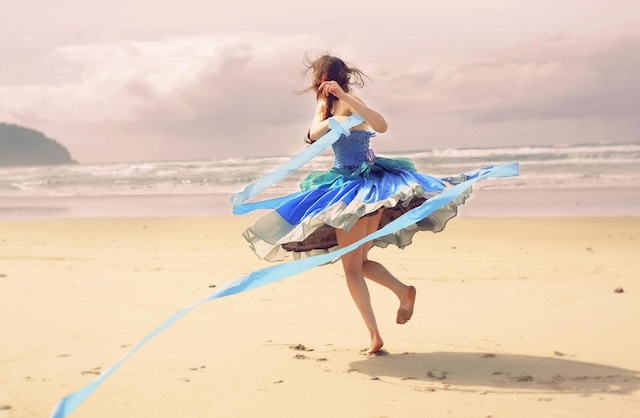
|
[17] Dramatic
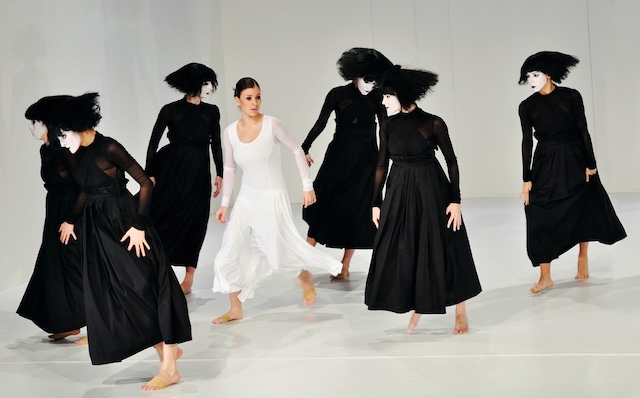
|
[102] Gentle
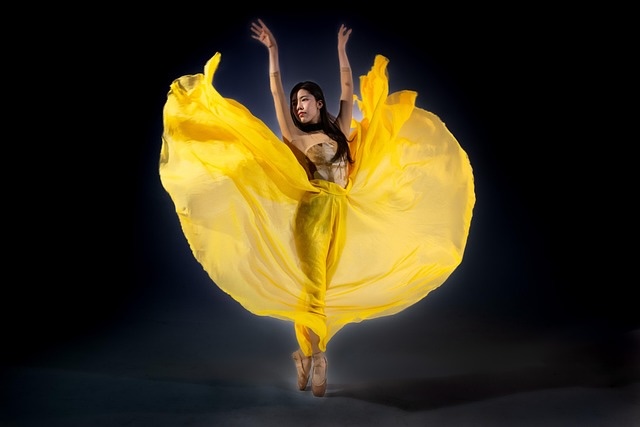
|
[17] Invigorating
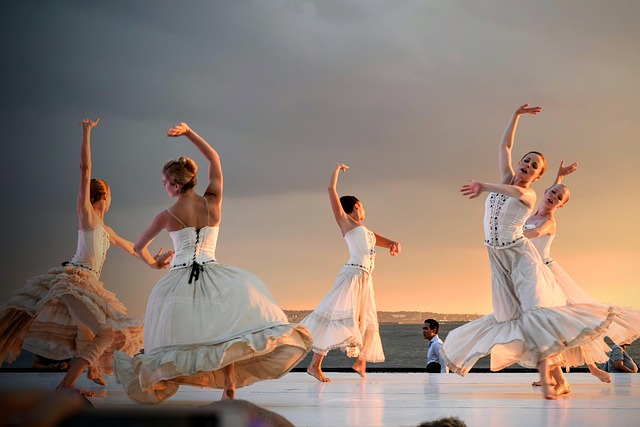
|
[18] Sad
|
| 619 views | 784 views | 844 views | 789 views | 761 views |

|

| 
| 
| 
| 
| 
| 
| 
| 
| 
| 
| 
| 
| 
| 
| 
| 
| 
| 
| 
| 
| 
| 
| 
| 
|

|
 On 8th Nov 2026, George Lonquist said they would use:
 Play-Along